Bybassus
Ancient city of Caria in modern-day Turkey
Bybassus or Bybassos or Bubassus or Bubassos (Ancient Greek: Βυβασσός) was a town in ancient Caria. Ephorus, according to Stephanus of Byzantium, wrote Bybasstum or Bybasston (Βύβασστον) and Bybastium or Bybastion (Βυβάστιον); and Diodorus means the same place, when he calls it Bubastus of the Chersonesus.
Nº Q65078096 ★★
Peu commune · Lieux
Bybassus
Ancient city of Caria in modern-day Turkey
Bybassus or Bybassos or Bubassus or Bubassos (Ancient Greek: Βυβασσός) was a town in ancient Caria. Ephorus, according to Stephanus of Byzantium, wrote Bybasstum or Bybasston (Βύβασστον) and Bybastium or Bybastion (Βυβάστιον); and Diodorus means the same place, when he calls it Bubastus of the Chersonesus.
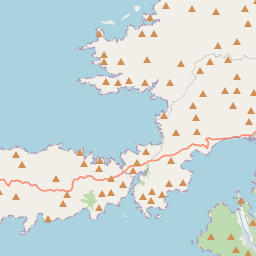
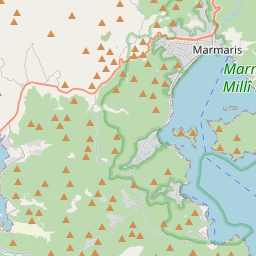
Sur la carte
Dernier prix
—
Prix plancher
—
Médiane 7 j
—
Ventes 30 j
0
Fourchette 30 j
—
En circulation
0
Cours
médiane
min – max
ventes
Aucune vente sur la période
Voir le tableau
| Date | médiane | Min | Max | ventes |
|---|
Historique des ventes
- Dernière vente
- —
- Moyenne 30 j
- —
- Plus bas 30 j
- —
- Plus haut 30 j
- —
- Ventes 7 j
- 0
- Ventes 30 j
- 0
Aucune vente pour l'instant.
Ventes anonymes : ni acheteur ni vendeur. Les chiffres ne comptent que les ventes entre joueurs.
Sur Wikipédia
Texte en anglais Pas encore d'article dans ta langue : extrait en anglais.
Bybassus or Bybassos or Bubassus or Bubassos (Ancient Greek: Βυβασσός) was a town in ancient Caria. Ephorus, according to Stephanus of Byzantium, wrote Bybasstum or Bybasston (Βύβασστον) and Bybastium or Bybastion (Βυβάστιον); and Diodorus means the same place, when he calls it Bubastus of the Chersonesus. Pliny the Elder has a "regio Bubassus;" and he adds, "there was a town Acanthus, otherwise called Dulopolis." He places the "regio Bubassus" next to Triopia, the district of Triopium. Finally, Pomponius Mela mentions a Bubassius Sinus. The Bubassia Chersonesus is mentioned by Herodotus. Herodotus tells a story of the Cnidians attempting to cut a canal through a narrow neck of land for the purpose of insulating their peninsula, and protecting themselves against the Persians; they were at the work while Harpagus was conquering Ionia. The isthmus where they made the attempt was five stadia wide, and rocky. This place cannot be the isthmus which connects the mainland with the high peninsula, once called Cape Krio (now Cape Deveboynu, for it is sandy, and Strabo says that Cape Krio was once an island, but in his time was connected with the land by a causeway. Besides this, the chief part of the city of Cnidus was on the mainland; though we cannot be sure that this was so in the time of Harpagus. The passage in Herodotus is somewhat obscure, but mainly because it is ill pointed. His description is in his usually diffuse, hardly grammatical, form. Herodotus says, "Both other Hellenes inhabit this country (Caria) and Lacedaemonian colonists, Cnidians, their territory being turned to the sea (the name is Triopium), and commencing from the Chersonesus Bubassiae, and all the Cnidia being surrounded by the sea, except a small part (for on the north it is bounded by the Gulf Ceramicus, and on the...
Texte : Wikipédia en anglais, CC BY-SA 4.0. ·
Cartes voisines
Tabae
Ville antique et siège titulaire en Turquie
Nº Q2386221 ★★

Cnide
Ancienne cité de Carie
Nº Q690575 ★★
Phoenix (Caria)
Ancient city of Caria in modern-day Turkey
Nº Q65058814 ★★

Heraeum
Nº Q5732571 ★★

Myonte
Nº Q1195800 ★★★

Gideros
Ancient city of Pontus in modern-day Turkey
Nº Q5201382 ★★★