
'En Esur
Large Chalcolithic village and Early Bronze Age city, Israel
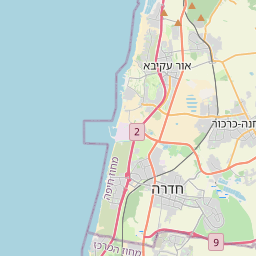
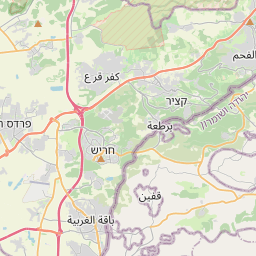
'En Esur, also En Esur (Hebrew: עין אֵסוּר; [ʕen ʔesuʁ] eh-N eh-s-oor) or Ein Asawir (Arabic: عين الأساور, lit. 'Spring of the Bracelets'), is an ancient site located on the northern Sharon Plain, at the entrance of the Wadi Ara pass leading from the Coastal Plain further inland. The site includes an archaeological mound (tell), called Tel Esur or Tell el-Asawir, another unnamed mound, and two springs, one of which gives the site its name.
Nº Q6989380 ★★
Peu commune · Lieux
'En Esur
Large Chalcolithic village and Early Bronze Age city, Israel
'En Esur, also En Esur (Hebrew: עין אֵסוּר; [ʕen ʔesuʁ] eh-N eh-s-oor) or Ein Asawir (Arabic: عين الأساور, lit. 'Spring of the Bracelets'), is an ancient site located on the northern Sharon Plain, at the entrance of the Wadi Ara pass leading from the Coastal Plain further inland. The site includes an archaeological mound (tell), called Tel Esur or Tell el-Asawir, another unnamed mound, and two springs, one of which gives the site its name.
Sur la carte
Dernier prix
—
Prix plancher
—
Médiane 7 j
—
Ventes 30 j
0
Fourchette 30 j
—
En circulation
0
Cours
médiane
min – max
ventes
Aucune vente sur la période
Voir le tableau
| Date | médiane | Min | Max | ventes |
|---|
Historique des ventes
- Dernière vente
- —
- Moyenne 30 j
- —
- Plus bas 30 j
- —
- Plus haut 30 j
- —
- Ventes 7 j
- 0
- Ventes 30 j
- 0
Aucune vente pour l'instant.
Ventes anonymes : ni acheteur ni vendeur. Les chiffres ne comptent que les ventes entre joueurs.
Sur Wikipédia
Texte en anglais Pas encore d'article dans ta langue : extrait en anglais.
'En Esur, also En Esur (Hebrew: עין אֵסוּר; [ʕen ʔesuʁ] eh-N eh-s-oor) or Ein Asawir (Arabic: عين الأساور, lit. 'Spring of the Bracelets'), is an ancient site located on the northern Sharon Plain, at the entrance of the Wadi Ara pass leading from the Coastal Plain further inland. The site includes an archaeological mound (tell), called Tel Esur or Tell el-Asawir, another unnamed mound, and two springs, one of which gives the site its name. A 7,000-year-old Early Chalcolithic large village already showing signs of incipient urbanisation and with an open space used for cultic activities was discovered at the site below later, Bronze Age remains. During the Early Bronze Age, around 3000 BCE, a massive fortified proto-city with an estimated population of 5,000 to 6,000 inhabitants existed there. It was the largest city in the region, larger than other significant sites such as Megiddo and Jericho, but smaller than more distant ones in Egypt and Mesopotamia. The city was discovered in 1977, but its massive extent was realized only in 1993. A major excavation between 2017 and 2019 ahead of the construction of a highway interchange exposed the city's houses, streets and public structures, as well as countless artifacts including pottery, figurines and tools. Archaeologists announced its discovery in 2019, calling it the "New York of the Early Bronze Age".
Texte : Wikipédia en anglais, CC BY-SA 4.0. · Image : Rimon98 (CC BY-SA 3.0) ·
Cartes voisines

Emar
Ancien État
Nº Q1196243 ★

Ein Hazeva
Nº Q12409412 ★★★
Canaanite shipwreck
Bronze Age shipwreck in the Mediterranean Sea
Nº Q126887814 ★★

Eridu
Ville antique de Basse-Mésopotamie, à une vingtaine de kilomètres au sud-ouest d’Ur
Nº Q210065 ★★★
Tel Motza temple
Ancient Israelite temple on the outskirts of Jerusalem
Nº Q16056713 ★★★

Erez
Kibboutz
Nº Q1350054 ★