

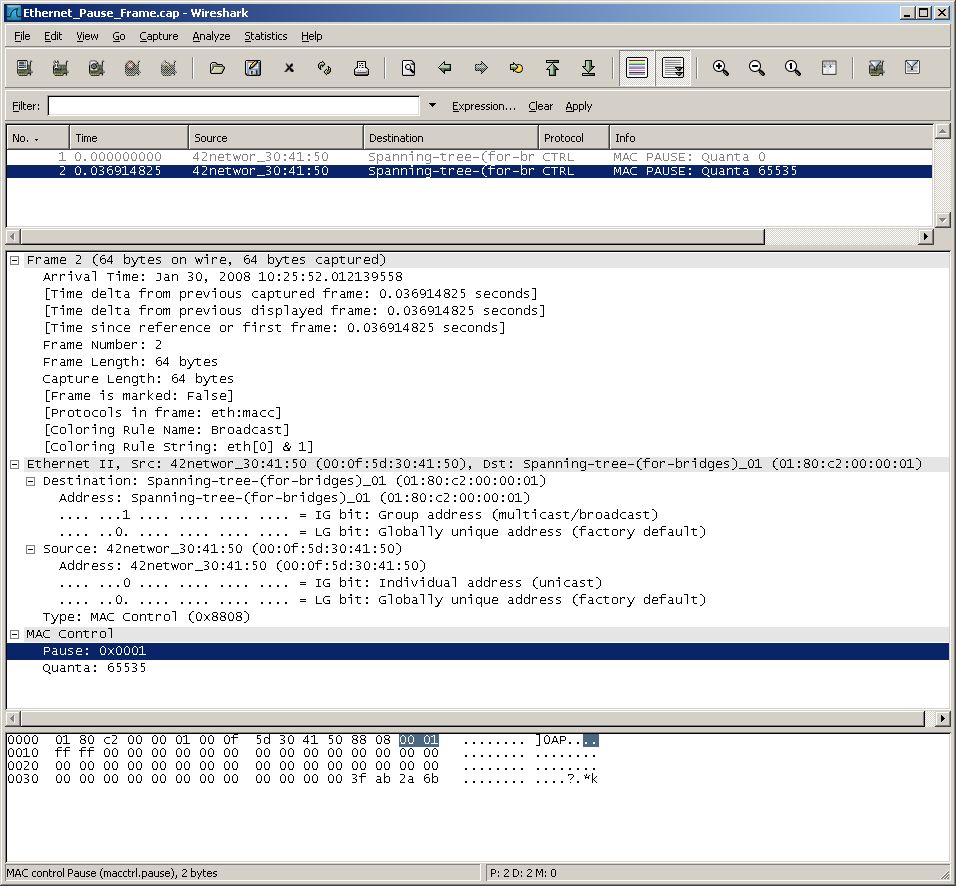
Ethernet flow control
Technology for computer networking
Ethernet flow control is a mechanism for temporarily stopping the transmission of data on the Ethernet-family of computer networks. The goal of this mechanism is to avoid packet loss in the presence of network congestion. The first flow control mechanism, the pause frame, was defined by the IEEE 802.3x standard.
Nº Q5403359 ★
Commune · Savoirs
Ethernet flow control
Technology for computer networking
Ethernet flow control is a mechanism for temporarily stopping the transmission of data on the Ethernet-family of computer networks. The goal of this mechanism is to avoid packet loss in the presence of network congestion. The first flow control mechanism, the pause frame, was defined by the IEEE 802.3x standard.
Sur Wikipédia
Texte en anglais Pas encore d'article dans ta langue : extrait en anglais.
Ethernet flow control is a mechanism for temporarily stopping the transmission of data on the Ethernet-family of computer networks. The goal of this mechanism is to avoid packet loss in the presence of network congestion. The first flow control mechanism, the pause frame, was defined by the IEEE 802.3x standard. The follow-on priority-based flow control, as defined in the IEEE 802.1Qbb standard, provides a link-level flow control mechanism that can be controlled independently for each class of service (CoS), as defined by IEEE P802.1p and is applicable to data center bridging (DCB) networks, and to allow for prioritization of voice over IP (VoIP), video over IP, and database synchronization traffic over default data traffic and bulk file transfers.
Texte : Wikipédia en anglais, CC BY-SA 4.0. · Image : Arkrishna (Public domain) ·
Cartes voisines
-
C
Contrôle de flux
Asservissement de débit binaire
Nº Q612457 ★
Pas en vente
-

Gigabit Ethernet
Nº Q1069084 ★★
Pas en vente
-
I
IEEE 802.3
Norme de l'IEEE pour les réseaux informatiques
Nº Q570951 ★★
Pas en vente
-
E
EtherCAT
Nº Q144985 ★★★
Pas en vente
-
I
IEEE 802.3ba
Standard sur les débits Ethenet
Nº Q2091565 ★★
Pas en vente
-
S
Structure de contrôle
Instruction particulière d'un langage de programmation impératif
Nº Q868299 ★★
Pas en vente