

Commune · Lieux
Monte Cocusso
Mountain in Italy
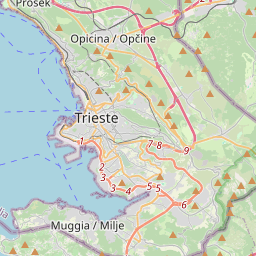
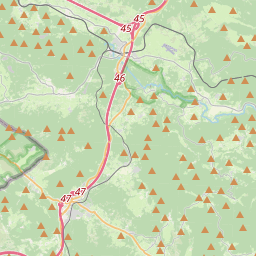
Mount Cocusso (Kokoš in Slovenian) is a mountainous relief on the border between Italy and Slovenia. It is the highest mountain in the Trieste Karst.
Sur la carte
Sur Wikipédia
Texte en anglais Pas encore d'article dans ta langue : extrait en anglais.
Mount Cocusso (Kokoš in Slovenian) is a mountainous relief on the border between Italy and Slovenia. It is the highest mountain in the Trieste Karst. In centuries past, local people referred to Mount Cucusso in a variety of ways. The inhabitants of Basovizza nicknamed it Maček ("Cat"), perceiving in it a resemblance to a large cat with glowing eyes (two bonfires were often lit on Velika Groblja and near Jirmanec). In Lokev, a village in Slovenia just a few kilometers from Italy, the place name Ožeg ("Burned," from the Slovene vžgati, meaning to kindle) took hold, following a fire that developed on the northern slope and spread to the outskirts of the town. Finally, the people of Grozzana called the mountain Golina, from the Slovene Gol ("bare.") The eastern slope was in fact stony, devoid of trees and shrubby vegetation. On the Josephinische Landesaufnahme maps the area of Mount Cocusso has marked toponyms: Some authors, such as the Slovenian Boris Čok, report that the present name Cocusso would derive from the oronym Golina. Golina would have been translated, by assonance, into Gallina (hen), later retranslated into Kokoš (Hen in Slovene) and finally toponymically Italianized into Cocusso. Dante Cannarella, a scientific popularizer and author of numerous publications on Trieste and the Karst, provides another explanation. According to him, Cocusso is a modern toponym, the Italian form of Kokus, which in Slavic languages has no meaning but is simply the Slovene euphony of the pre-existing Concusso, deprived of a letter since in Slovene grammar the n cannot precede the c. The first toponym was therefore Concusso (with n), already found in maps of the 17th century and in this form still in use in the first decades of the 20th century.
Texte : Wikipédia en anglais, CC BY-SA 4.0. · Image : Rupikaber at Italian Wikipedia (Public domain) ·