
Stalag I-B
Prisoner-of-war camp
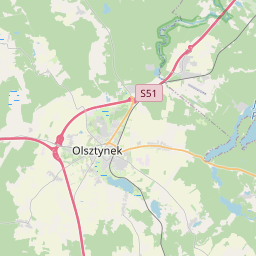
Stalag I-B Hohenstein was a German World War II prisoner-of-war camp located 2 kilometres (1.2 mi) west of Hohenstein, East Prussia (now Olsztynek, Poland). The camp was partially located on the grounds of the Tannenberg Memorial and initially included a set of wooden structures intended to house World War I veterans during German Nazi festivities.
Nº Q7597181 ★★★
Rare · Lieux
Stalag I-B
Prisoner-of-war camp
Stalag I-B Hohenstein was a German World War II prisoner-of-war camp located 2 kilometres (1.2 mi) west of Hohenstein, East Prussia (now Olsztynek, Poland). The camp was partially located on the grounds of the Tannenberg Memorial and initially included a set of wooden structures intended to house World War I veterans during German Nazi festivities.
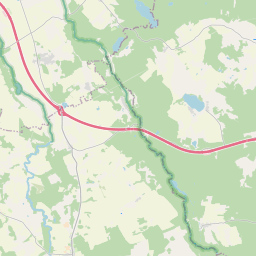
Sur la carte
Dernier prix
—
Prix plancher
—
Médiane 7 j
—
Ventes 30 j
0
Fourchette 30 j
—
En circulation
0
Cours
médiane
min – max
ventes
Aucune vente sur la période
Voir le tableau
| Date | médiane | Min | Max | ventes |
|---|
Historique des ventes
- Dernière vente
- —
- Moyenne 30 j
- —
- Plus bas 30 j
- —
- Plus haut 30 j
- —
- Ventes 7 j
- 0
- Ventes 30 j
- 0
Aucune vente pour l'instant.
Ventes anonymes : ni acheteur ni vendeur. Les chiffres ne comptent que les ventes entre joueurs.
Sur Wikipédia
Texte en anglais Pas encore d'article dans ta langue : extrait en anglais.
Stalag I-B Hohenstein was a German World War II prisoner-of-war camp located 2 kilometres (1.2 mi) west of Hohenstein, East Prussia (now Olsztynek, Poland). The camp was partially located on the grounds of the Tannenberg Memorial and initially included a set of wooden structures intended to house World War I veterans during German Nazi festivities. Established in 1939 to house Polish soldiers captured in the course of the September Campaign, with time it was extended to house also Belgians, French, Italian, Serbian and Soviet soldiers. Harsh conditions, malnutrition, maltreatment and recurring typhoid epidemics led to many deaths among the prisoners. Notably during the winter of 1941–42 roughly 25,000 people died there, mostly Soviet soldiers. It is estimated that altogether 650,000 people passed through this camp and its sub-camps. Between 50 and 55 thousand of them were buried in 500 mass graves at the Sudwa cemetery located nearby. The site is commemorated with a memorial stone by Ryszard Wachowski. Since 1980 the Olsztynek-based municipal museum hosts a small exhibition devoted to the camp and its inmates. Parts of the former camp were uncovered during construction of the S7 Expressway.
Texte : Wikipédia en anglais, CC BY-SA 4.0. · Image : Halibutt (CC BY-SA 3.0) ·
Cartes voisines

Oleśnica
Ville polonaise
Nº Q138229 ★★★

Comté de Clare
Comté d'Irlande
Nº Q181862 ★★★

subah du Bengale
Subdivision of the Mughal Empire, encompassing most of the Bengal region
Nº Q4083684 ★★★

West London
Nº Q2734390 ★★★

Dutch Harbor
Bay in Aleutians West Census Area, Alaska, United States
Nº Q49376667 ★★★

Donghu (peuple)
Peuple du massif du Grand Khingan, dans la province du Heilongjiang, en Chine
Nº Q908664 ★★★