

Commune · Lieux
URAN
Ukrainian Radio Interferometer of the National Academy of Sciences of Ukraine
URAN (Ukrainian Radio Interferometer of NASU) (Ukrainian: Український Радіоіонтеферометр Академії Наук - УРАН) is an array of radio-telescopes, spread across Ukraine and used for long-baseline interferometry in the 8–40 MHz range. The most sensitive of the telescopes is UTR-2.
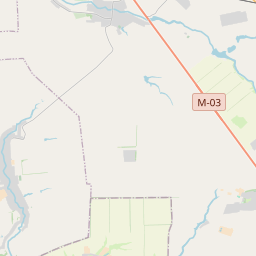
Sur la carte


Sur Wikipédia
Texte en anglais Pas encore d'article dans ta langue : extrait en anglais.
URAN (Ukrainian Radio Interferometer of NASU) (Ukrainian: Український Радіоіонтеферометр Академії Наук - УРАН) is an array of radio-telescopes, spread across Ukraine and used for long-baseline interferometry in the 8–40 MHz range. The most sensitive of the telescopes is UTR-2. URAN-1 was built in 1975 in Zmiiv, Kharkiv oblast. URAN-2 was constructed starting in 1979 in Stepanivka village near Poltava. URAN-3 is near Shatsk, in the north-west, near the border with Poland and Belarus. URAN-4 was built in 1975 and is in the south-west, west of Odesa, by the Moldovan border. Auxiliary telescopes are: URAN-1, with 96 dipoles in a 178 by 28 metres (584 ft × 92 ft) array; URAN-2, with 512 dipoles in a 238 by 118 metres (781 ft × 387 ft) array; URAN-3, with 256 dipoles in a 238 by 58 metres (781 ft × 190 ft) array; and URAN-4, with 128 dipoles in a 238 by 28 metres (781 ft × 92 ft) array. Because of the small number of baselines, images from URAN tend to be produced by model-fitting to sums of Gaussians rather than by direct synthesis.
Texte : Wikipédia en anglais, CC BY-SA 4.0. · Image : YeS (Serge Yerin) (CC BY-SA 4.0) ·
Cartes voisines
-
 ★
★
UTR-2
Radio telescope with large antenna array
-
 ★★
★★
Giant Ukrainian Radio Telescope
Low frequency radio telescope which is being built and operated at IRA NASU in Ukraine
-
 ★
★
Radio Promin
Radio station in Ukraine
-
I★★
Institute of Radio Astronomy of the National Academy of Sciences of Ukraine
Facility in Kharkiv, Ukraine
-
U★★★
Ukrainian Radio Interferometer of NASU-2
-
U★★★
Ukrainian National Association
Ukrainian fraternal organization in North America