

Incomum · Lugares
Casilinum
Ancient town in Campania, Italy
Casilinum (Ancient Greek: Κασιλῖνον) was an ancient city of Campania, Italy, situated some 3 miles north-west of the ancient Capua. The position of Casilinum at the junction of the Via Appia and Via Latina, at their crossing of the river Volturnus by a still-existing three-arched bridge, gave the town considerable strategic importance during the Roman Republic.
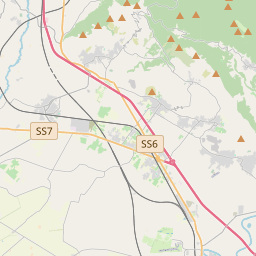
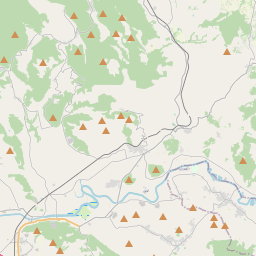
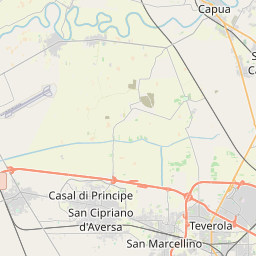
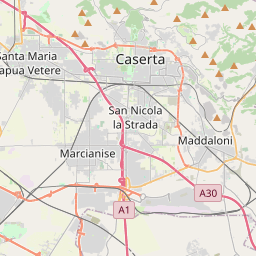
No mapa
Na Wikipédia
Texto em inglês Ainda não há artigo no teu idioma: trecho em inglês.
Casilinum (Ancient Greek: Κασιλῖνον) was an ancient city of Campania, Italy, situated some 3 miles north-west of the ancient Capua. The position of Casilinum at the junction of the Via Appia and Via Latina, at their crossing of the river Volturnus by a still-existing three-arched bridge, gave the town considerable strategic importance during the Roman Republic. Casilinum was located where the modern city of Capua now stands, while the ancient Capua was located on the site of the modern Santa Maria Capua Vetere. While the original pre-Roman town, doubtless dependent on neighboring Capua, stood entirely on the left (south) bank surrounded on three sides by the river, the Roman city extended to the right bank also. Remains of this later town have been found at some 25 feet below the modern ground-level, the river-bed having since risen considerably. During the Second Punic War, Casilinum was first occupied by Quintus Fabius Maximus Verrucosus in 217 BCE. The town was taken by Hannibal after a gallant defence by troops from Praeneste and Perusia in the winter of 216-215 BCE, but recaptured by Roman forces the following year, thereafter serving the Romans as a base of operations against rebellious Capua. Casilinum eventually lost its independence and became a praefectura. Caesar founded a colony at the town in 59 BCE, which was subsequently renewed by Mark Antony in 44 BCE. The veterans settled within the town took the side of Octavian after Caesar's death.
Texto: Wikipédia em inglês, CC BY-SA 4.0. · Imagem: Cassius Ahenobarbus (CC BY-SA 3.0) ·