

Comum · Saberes
Global illumination
Algorithms used in 3D computer graphics
Global illumination (GI), or indirect illumination, refers to a group of algorithms used in 3D computer graphics meant to add more realistic lighting to 3D scenes. Such algorithms take into account not only the light that comes directly from a light source (direct illumination), but also subsequent "bounces" where light rays are reflected by other surfaces in the scene (indirect illumination).
Na Wikipédia
Texto em inglês Ainda não há artigo no seu idioma: trecho em inglês.
Global illumination (GI), or indirect illumination, refers to a group of algorithms used in 3D computer graphics meant to add more realistic lighting to 3D scenes. Such algorithms take into account not only the light that comes directly from a light source (direct illumination), but also subsequent "bounces" where light rays are reflected by other surfaces in the scene (indirect illumination). The term "global illumination" was first used by Turner Whitted in his paper "An improved illumination model for shaded display", to differentiate between illumination calculations at a local scale (using geometric information directly, such as in Phong shading), a microscopic scale (extending local geometry with microfacet detail), and a global scale, including not only the geometry itself but also the visibility of every other object in the scene. Theoretically, reflections, refractions, transparency, and shadows are all examples of global illumination, because when simulating them, one object affects the rendering of another (as opposed to an object being affected only by a direct source of light). In practice, however, only the simulation of diffuse inter-reflection or caustics is called global illumination, especially in real-time settings.
Texto: Wikipédia em inglês, CC BY-SA 4.0. · Imagem: Hipocrite at English Wikipedia (Public domain) ·
Cartas próximas
-
 ★
★
Radiosity (computer graphics)
Computer graphics rendering method using diffuse reflection
-
 ★★
★★
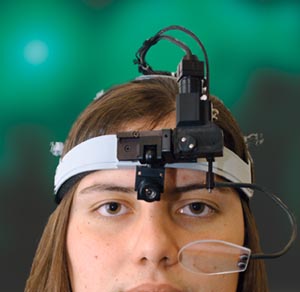
Rastreamento Ocular
Measuring the point of gaze or motion of an eye relative to the head
-
 ★★★
★★★
Iridescência
Fenômeno óptico
-
 ★★★
★★★
Imagem de satélite
-
 ★
★
Flashing (cinematography)
Exposure of the film or digital sensors to uniform light prior to exposing it to the scene
-
 ★★
★★
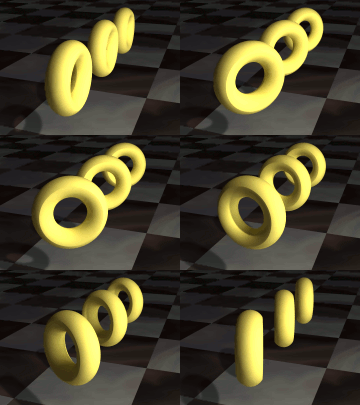
3D animation
Animation technique