

Incomum · Lugares
Leine Uplands
Mountains in Germany
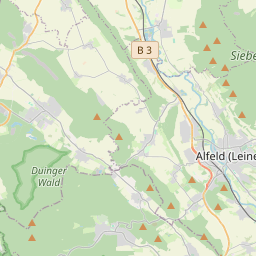
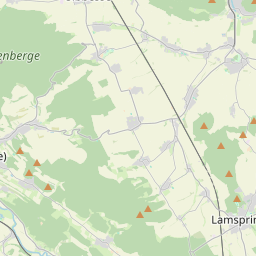
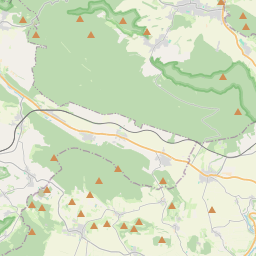
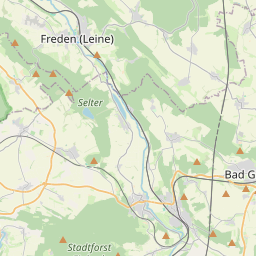
The Leine Uplands (German: Leinebergland, ) is a region in Germany's Central Uplands which forms a part of the Lower Saxon Hills and lies along the River Leine between Göttingen and Hanover. It borders on the Weser Uplands in the west, the Innerste Uplands in the northeast, the Harz in the east and Untereichsfeld in the southeast.
No mapa
Na Wikipédia
Texto em inglês Ainda não há artigo no teu idioma: trecho em inglês.
The Leine Uplands (German: Leinebergland, German pronunciation) is a region in Germany's Central Uplands which forms a part of the Lower Saxon Hills and lies along the River Leine between Göttingen and Hanover. It borders on the Weser Uplands in the west, the Innerste Uplands in the northeast, the Harz in the east and Untereichsfeld in the southeast. The Leine Uplands, which merge into the Weser Uplands to the east and the Harz to the west, are not a clearly defined landscape in terms of being a natural region but are nevertheless relatively easily delineated. Their extent from south to north is determined by the river that lends them their name and their extent from east to west by high ridges. From north to south the uplands can be broadly divided into a southern half around the wide trough of the River Leine's middle course and a northern half by the lower reaches of the same river. The River Leine flows from Friedland via Göttingen and Northeim to Einbeck through the Leine trough (Leine-Ilm Basin), an important north–south orientated geological rift valley. On the hilltops along the valley of the Leine there are many castles that controlled the north–south road network in the valley during the Middle Ages and could also block it entirely. In the southeastern part of the Leine Uplands, east of the valley, is the plateau of the Göttingen-Northeim Forest which is founded on Bunter sandstone and Muschelkalk. The western edge of the forest (in a northerly direction) reaches from Friedland via Göttingen and Nörten-Hardenberg to Northeim. It is here that the largest group of abris in central Europe may be found.
Texto: Wikipédia em inglês, CC BY-SA 4.0. · Imagem: photo taken by User:Gerhard Elsner (CC BY-SA 3.0) ·