
Leitha Mountains
Mountain range
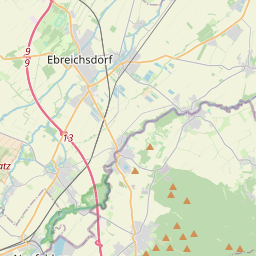
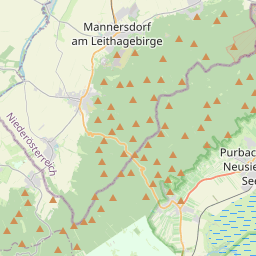
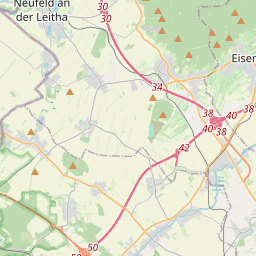
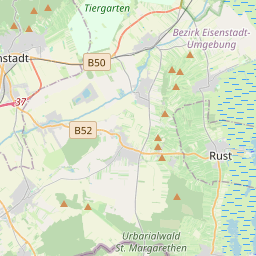
The Leitha Mountains or, less frequently, Leitha Hills (German: Leithagebirge; Hungarian: Lajta-hegység), are a range of hills in Austria lying on the boundary between Lower Austria and Burgenland. The range is an offshoot of the Alps and forms a connection to the Carpathians to the north.
Nº Q696846 ★★★
Rara · Lugares
Leitha Mountains
Mountain range
The Leitha Mountains or, less frequently, Leitha Hills (German: Leithagebirge; Hungarian: Lajta-hegység), are a range of hills in Austria lying on the boundary between Lower Austria and Burgenland. The range is an offshoot of the Alps and forms a connection to the Carpathians to the north.
No mapa
Último preço
—
Preço mínimo
—
Mediana 7 d
—
Vendas 30 d
0
Faixa 30 d
—
Em circulação
0
Cotação
mediana
mín – máx
vendas
Sem vendas no período
Ver tabela
| Data | mediana | Mín | Máx | vendas |
|---|
Histórico de vendas
- Última venda
- —
- Média 30 d
- —
- Mínima 30 d
- —
- Máxima 30 d
- —
- Vendas 7 d
- 0
- Vendas 30 d
- 0
Ainda sem vendas.
Vendas anônimas: sem comprador nem vendedor. Os números contam só vendas entre jogadores.
Na Wikipédia
Texto em inglês Ainda não há artigo no seu idioma: trecho em inglês.
The Leitha Mountains or, less frequently, Leitha Hills (German: Leithagebirge; Hungarian: Lajta-hegység), are a range of hills in Austria lying on the boundary between Lower Austria and Burgenland. The range is an offshoot of the Alps and forms a connection to the Carpathians to the north. It is a ridge about 35 km long and 5–7 km wide along the southeastern edge of the Vienna Basin from Brucker Pforte in the northeast to Wiener Neustädter Pforte (Ödenburger Pforte) in the southwest. The range lies to the southeast of the Leitha River and is considered part of the Randgebirge östlich der Mur division of the Eastern Alps. Its highest peak, Sonnenberg (Hungarian: Nap-hegy), is 484 m above sea level. The ridge is heavily forested with deciduous trees such as oak, hornbeam, and beech predominating.
Texto: Wikipédia em inglês, CC BY-SA 4.0. · Imagem: Stanislav Doronenko (CC BY 3.0) ·
Cartas próximas

Birnhorn
Mountain in the Leoganger Steinberge in Salzburg
Nº Q683611 ★★★

Schafberg (Salzkammergut)
Mountain in the Salzkammergut-Berge in Salzburg
Nº Q682684 ★★★★

Wurmberg
Highest mountain of Lower Saxony in Germany
Nº Q314735 ★★★★

Hohes Licht
Nº Q524774 ★★★

Bosques de Viena
Nº Q251246 ★★★★

Ahornspitze
Mountain in the Zillertal Alps in Tyrol, Austria
Nº Q402568 ★★★