


Ndjili
Commune of the district of Tshangu, in the city of Kinshasa, located south of the commune of Masina in the Democratic Republic of Congo
Ndjili (also spelled N'Djili) is a commune in the Tshangu District of Kinshasa. Named after the Ndjili River, which forms its western boundary, the commune covers an area of approximately 11.4 square kilometers and had an estimated population of 1,157,619 as of 2015, making it the fifth-most populous commune.
Nº Q3337489 ★★
Incomum · Lugares
Ndjili
Commune of the district of Tshangu, in the city of Kinshasa, located south of the commune of Masina in the Democratic Republic of Congo
Ndjili (also spelled N'Djili) is a commune in the Tshangu District of Kinshasa. Named after the Ndjili River, which forms its western boundary, the commune covers an area of approximately 11.4 square kilometers and had an estimated population of 1,157,619 as of 2015, making it the fifth-most populous commune.
No mapa
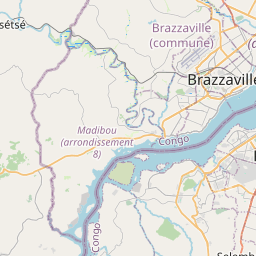
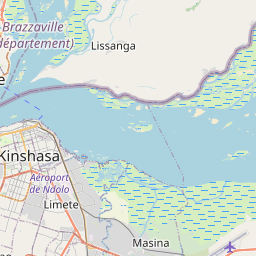
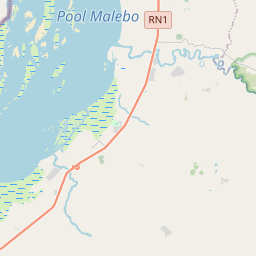
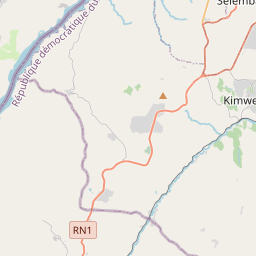
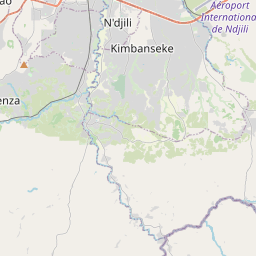
Na Wikipédia
Texto em inglês Ainda não há artigo no seu idioma: trecho em inglês.
Ndjili (also spelled N'Djili) is a commune in the Tshangu District of Kinshasa. Named after the Ndjili River, which forms its western boundary, the commune covers an area of approximately 11.4 square kilometers and had an estimated population of 1,157,619 as of 2015, making it the fifth-most populous commune. Ndjili is connected to the city center by Lumumba Boulevard, a major 13-kilometer-long highway. Officially established by ministerial decree no. 69/0042 on 23 January 1969, the commune's boundaries are demarcated by prominent natural and infrastructural features: Lumumba Boulevard to the north (bordering Masina), the Nsanga River to the east (bordering Kimbanseke), President Mobutu Avenue and Kumbi Street to the south, and the Ndjili River to the west (bordering Kisenso and Matete). Administratively, the commune is divided into 13 quartiers (quarters), of which six are urbanized in accordance with planning standards, while the remainder are informal settlements. Each quartier is further subdivided into avenues. Ndjili's economy is largely informal and centered around markets, workshops, tailoring houses, and small-scale agriculture, with vegetable distribution supported by the Union des Coopératives des Maraîchers de Kinshasa (UCOOPMAKIN), established in 1953. Though not industrial, the commune is renowned for its skilled auto mechanics, popularly referred to as bana N'djili. It also hosts branches of the Peace Court of Kinshasa, the High Court Prosecutor's Office, and the Kinshasa High Court.
Texto: Wikipédia em inglês, CC BY-SA 4.0. · Imagem: Vberger at French Wikipedia (Public domain) ·
Cartas próximas
-

Ndjili River
River in Democratic Republic of the Congo
Nº Q3337491 ★
Sem ofertas
-

Aeroporto de N'djili
Nº Q645492 ★★★
Sem ofertas
-

Tshangu District
Place in Kinshasa, DR Congo
Nº Q3541516 ★
Sem ofertas
-

Nsele
Commune in Kinshasa
Nº Q3345959 ★★
Sem ofertas
-

Quinxassa
Comuna no norte da cidade de Quinxassa
Nº Q3091458 ★★
Sem ofertas
-

Ngiri-Ngiri
Commune in Kinshasa, Democratic Republic of the Congo
Nº Q3339313 ★★
Sem ofertas