

Comum · Saberes
Old Mandarin
Speech of northern China during the time of the Jin and Yuan dynasties (12th to 14th centuries)
Old Mandarin or Early Mandarin was the speech of northern China during the Jurchen-ruled Jin dynasty and the Mongol-led Yuan dynasty (12th to 14th centuries). New genres of vernacular literature were based on this language, including verse, drama and story forms, such as the qu and sanqu.
Na Wikipédia
Texto em inglês Ainda não há artigo no seu idioma: trecho em inglês.
Old Mandarin or Early Mandarin was the speech of northern China during the Jurchen-ruled Jin dynasty and the Mongol-led Yuan dynasty (12th to 14th centuries). New genres of vernacular literature were based on this language, including verse, drama and story forms, such as the qu and sanqu. The phonology of Old Mandarin has been inferred from the ʼPhags-pa script, an alphabet created in 1269 for several languages of the Mongol empire, including Chinese, and from two rime dictionaries, the Menggu Ziyun (1308) and the Zhongyuan Yinyun (1324). The rhyme books differ in some details but show many of the features characteristic of modern Mandarin dialects, such as the reduction and disappearance of final stops and the reorganization of the four tones of Middle Chinese.
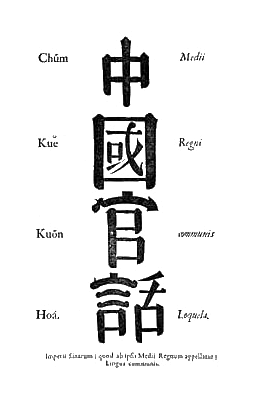
Texto: Wikipédia em inglês, CC BY-SA 4.0. · Imagem: Zhu Zongwen 朱宗文 (Public domain) ·
Cartas próximas
-
 ★
★
History of the Chinese language
Aspect of history
-
 ★★
★★
Mandarim (língua franca imperial tardia)
Língua falada comum de administração do império chinês durante as dinastias Ming e Qing, posteriormente evoluindo para o chinês padrão
-
 ★★
★★
Língua jurchén
Língua tungúsica da Manchúria oriental
-
 ★★
★★
Written vernacular Chinese
Forms of written Chinese based on the varieties of Chinese spoken throughout China, as opposed to Classical Chinese
-
 ★
★
Vietnamese literature
Literary works of Vietnam
-
 ★★
★★
Pyu script
Historic Brahmic script used in Burma