
Petzen
Mountain
Petzen (German) or Peca (Slovene) is the highest mountain of the eastern Karawanks, the second-highest mountain of the Northern Karawanks and the most eastern two-thousand-metre mountain of Slovenia. It is a mighty mountain with a characteristic shape of a tableland with rocky peaks protruding from it.
Nº Q177047 ★★
Incomum · Lugares
Petzen
Mountain
Petzen (German) or Peca (Slovene) is the highest mountain of the eastern Karawanks, the second-highest mountain of the Northern Karawanks and the most eastern two-thousand-metre mountain of Slovenia. It is a mighty mountain with a characteristic shape of a tableland with rocky peaks protruding from it.
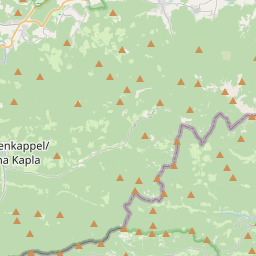
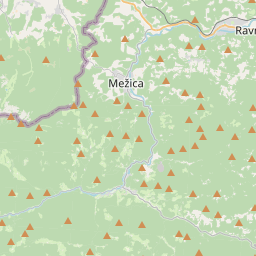
No mapa
Último preço
—
Preço mínimo
—
Mediana 7 d
—
Vendas 30 d
0
Faixa 30 d
—
Em circulação
0
Cotação
mediana
mín – máx
vendas
Sem vendas no período
Ver tabela
| Data | mediana | Mín | Máx | vendas |
|---|
Histórico de vendas
- Última venda
- —
- Média 30 d
- —
- Mínima 30 d
- —
- Máxima 30 d
- —
- Vendas 7 d
- 0
- Vendas 30 d
- 0
Ainda sem vendas.
Vendas anônimas: sem comprador nem vendedor. Os números contam só vendas entre jogadores.
Na Wikipédia
Texto em inglês Ainda não há artigo no seu idioma: trecho em inglês.
Petzen (German) or Peca (Slovene) is the highest mountain of the eastern Karawanks, the second-highest mountain of the Northern Karawanks and the most eastern two-thousand-metre mountain of Slovenia. It is a mighty mountain with a characteristic shape of a tableland with rocky peaks protruding from it. The mountain borders the Meža Valley and the Topla Valley to the south and east, and the Jaun Valley to the north, and is separated by the narrow valley of the Bela Creek from Hochobir. Two thirds of the mountain lies in Austria, and one third in Slovenia. The mountain reaches its highest elevation on the mountain crest of the Kordež Head (Slovene: Kordeževa Glava, German: Kordeschkopf, 2,125 metres or 6,972 feet). The border runs across it. The mountain is built of Triassic Wetterstein limestone and Wetterstein dolomite. In the past, lead and zinc was mined on Peca, the shafts belonging to the Topla and Mežica mines. The lead-zinc ore occurs in Middle to Upper Triassic carbonate rocks deposited in an anoxic supratidal marine environment, similar to other Mississippi Valley-type lead-zinc ores. In addition to the ore, several rare minerals were discovered underground in the mountain, such as wulfenite and calcite. A mine on the mountain is accessible to mountain bikes. The lower slopes on the Slovenian side are forested, whereas the higher slopes are home to a variety of Alpine flora, including several species of flowers A mountain hut was built at Little Peca (Slovene: Mala Peca; 1,665 metres or 5,463 feet) in 1928, which was burnt down during World War II, and rebuilt in 1957. Since 1936, the chapel of Sts. Cyril and Methodius stands next to it. The beginning of an abandoned pit, named Matjaž Cave after King Matjaž, is situated in the vicinity, which is a historical monument. Inside it,...
Texto: Wikipédia em inglês, CC BY-SA 4.0. · Imagem: User Tschax (own photography) on de.wikipedia (CC BY-SA 3.0) ·
Cartas próximas
-

Caravanche
Alpes ao longo da fronteira entre Austria e Eslovênia
Nº Q198007 ★★★★
Sem ofertas
-

Krn
Mountain
Nº Q1430355 ★★★
Sem ofertas
-

Petzeck
Mountain in the Schober Group in Carinthia
Nº Q387629 ★★
Sem ofertas
-

Mittagskogel
Mountain in the Karawanks at the border Carinthia / Slovenia
Nº Q386729 ★★★
Sem ofertas
-

Karawanks Tunnel (motorway)
Tunnel between Austria and Slovenia
Nº Q684130 ★★★★★
Sem ofertas
-

Kanin Mountains
Mountain range on the border of Italy and Slovenia
Nº Q3663438 ★★
Sem ofertas