
Rùm
Island in Lochaber, Highland, Scotland, UK, one of the Small Isles of the Inner Hebrides
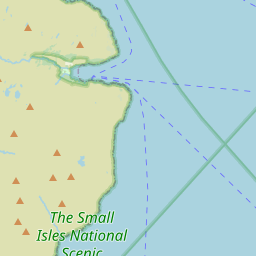
Rùm (Scottish Gaelic pronunciation: [rˠuːm]), a Scottish Gaelic name often anglicised to Rum ( rum), is one of the Small Isles of the Inner Hebrides, off the west coast of Scotland, in the district of Lochaber. For much of the 20th century the name became Rhum, a spelling invented by the former owner, Sir George Bullough, because he did not relish the idea of having the title "Laird of Rum".
Nº Q278082 ★★
Incomum · Lugares
Rùm
Island in Lochaber, Highland, Scotland, UK, one of the Small Isles of the Inner Hebrides
Rùm (Scottish Gaelic pronunciation: [rˠuːm]), a Scottish Gaelic name often anglicised to Rum ( rum), is one of the Small Isles of the Inner Hebrides, off the west coast of Scotland, in the district of Lochaber. For much of the 20th century the name became Rhum, a spelling invented by the former owner, Sir George Bullough, because he did not relish the idea of having the title "Laird of Rum".
No mapa

Último preço
—
Preço mínimo
—
Mediana 7 d
—
Vendas 30 d
0
Faixa 30 d
—
Em circulação
0
Cotação
mediana
mín – máx
vendas
Sem vendas no período
Ver tabela
| Data | mediana | Mín | Máx | vendas |
|---|
Histórico de vendas
- Última venda
- —
- Média 30 d
- —
- Mínima 30 d
- —
- Máxima 30 d
- —
- Vendas 7 d
- 0
- Vendas 30 d
- 0
Ainda sem vendas.
Vendas anônimas: sem comprador nem vendedor. Os números contam só vendas entre jogadores.
Na Wikipédia
Texto em inglês Ainda não há artigo no seu idioma: trecho em inglês.
Rùm (Scottish Gaelic pronunciation: [rˠuːm]), a Scottish Gaelic name often anglicised to Rum ( rum), is one of the Small Isles of the Inner Hebrides, off the west coast of Scotland, in the district of Lochaber. For much of the 20th century the name became Rhum, a spelling invented by the former owner, Sir George Bullough, because he did not relish the idea of having the title "Laird of Rum". It is the largest of the Small Isles, and the 15th-largest Scottish island, and is inhabited by about 30 people, all of whom live in the hamlet of Kinloch on the east coast. The island has been inhabited since the 8th millennium BC and provides some of the earliest-known evidence of human occupation in Scotland. The early Celtic and Norse settlers left only a few written accounts and artefacts. From the 12th or 13th centuries the island was held by various clans, including the MacLeans of Coll. The population had grown to more than 400 by the late 18th century, but the island was cleared of its indigenous population between 1826 and 1828. The island then became a sporting estate; the exotic Kinloch Castle was constructed by the Bulloughs in 1900. Rùm was purchased by the Nature Conservancy Council in 1957. Rùm is mainly igneous in origin, and its mountains were eroded by Pleistocene glaciation. It is now an important study site for research in ecology, especially of red deer, and is the site of a successful reintroduction programme for the white-tailed sea eagle. Its economy is entirely dependent on NatureScot, a public body that now manages the island, and there have been calls for a greater diversity of housing provision. A Caledonian MacBrayne ferry links the island with the mainland town of Mallaig. In 2024 the island was designated...
Texto: Wikipédia em inglês, CC BY-SA 4.0. · Imagem: Tony Page (CC BY-SA 2.0) ·


