
Seneca Village
Human settlement in the United States of America
Seneca Village was a 19th-century settlement of mostly African American landowners in the borough of Manhattan in New York City, within what would become present-day Central Park. The settlement was located near the current Upper West Side neighborhood, approximately bounded by Central Park West and the axes of 82nd Street, 89th Street, and Seventh Avenue, had they been constructed through the park.
Nº Q2103252 ★★
Incomum · Lugares
Seneca Village
Human settlement in the United States of America
Seneca Village was a 19th-century settlement of mostly African American landowners in the borough of Manhattan in New York City, within what would become present-day Central Park. The settlement was located near the current Upper West Side neighborhood, approximately bounded by Central Park West and the axes of 82nd Street, 89th Street, and Seventh Avenue, had they been constructed through the park.
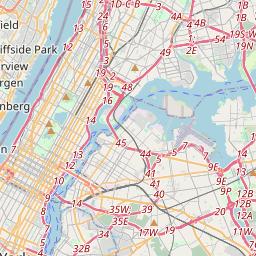
No mapa
Último preço
—
Preço mínimo
—
Mediana 7 d
—
Vendas 30 d
0
Faixa 30 d
—
Em circulação
0
Cotação
mediana
mín – máx
vendas
Sem vendas no período
Ver tabela
| Data | mediana | Mín | Máx | vendas |
|---|
Histórico de vendas
- Última venda
- —
- Média 30 d
- —
- Mínima 30 d
- —
- Máxima 30 d
- —
- Vendas 7 d
- 0
- Vendas 30 d
- 0
Ainda sem vendas.
Vendas anônimas: sem comprador nem vendedor. Os números contam só vendas entre jogadores.
Na Wikipédia
Texto em inglês Ainda não há artigo no seu idioma: trecho em inglês.
Seneca Village was a 19th-century settlement of mostly African American landowners in the borough of Manhattan in New York City, within what would become present-day Central Park. The settlement was located near the current Upper West Side neighborhood, approximately bounded by Central Park West and the axes of 82nd Street, 89th Street, and Seventh Avenue, had they been constructed through the park. Seneca Village was founded in 1825 by free Black Americans, the first such community in the city, although under Dutch rule there was a "half-free" community of African-owned farms north of New Amsterdam. At its peak, the community had approximately 225 residents, three churches, two schools, and three cemeteries. The settlement was later also inhabited by Irish and German immigrants. Seneca Village existed until 1857, when, through eminent domain, the villagers and other settlers in the area were forced to leave and their houses were torn down for the construction of Central Park. The entirety of the village was dispersed. Several vestiges of Seneca Village's existence have been found over the years, including two graves and a burial plot. The settlement was largely forgotten until the publication of Roy Rosenzweig and Elizabeth Blackmar's book The Park and the People: A History of Central Park in 1992. After a 1997 New-York Historical Society exhibition, the Seneca Village Project was formed in 1998 to raise awareness of the village, and several archaeological digs have been conducted. In 2001, a historical sign was unveiled, commemorating the site where Seneca Village once stood. In 2019, the Central Park Conservancy installed a temporary exhibit of signage in the park, marking the sites of the Village's churches, some houses, gardens, and natural features.
Texto: Wikipédia em inglês, CC BY-SA 4.0. · Imagem: Viele, Egbert L and own work (Public domain) ·
Cartas próximas

West Village
Neighborhood of Manhattan in New York City, United States
Nº Q1191048 ★★★

Senecas
Nº Q213422 ★★★

Upper East Side
Bairro em Manhattan, Nova Iorque
Nº Q455587 ★★★

Lenox Hill
Neighborhood of Manhattan in New York City, United States
Nº Q1190605 ★

East Village
Bairro de Manhattan, Nova Iorque, Estados Unidos
Nº Q1043326 ★★★

Sexta Avenida
Avenida em Manhattan, Nova Iorque, Estados Unidos
Nº Q109873 ★