

Incomum · Lugares
Shinkolobwe
Name of a town and a mine in the Katanga province of the Democratic Republic of the Congo
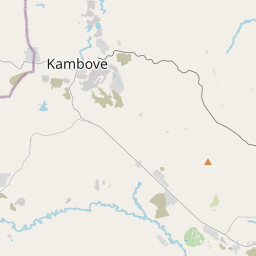
Shinkolobwe, or Kasolo, or Chinkolobew, or Shainkolobwe, was a radium and uranium mine in the Haut-Katanga Province of the Democratic Republic of the Congo (DRC), located 20 km (12.4 mi) west of Likasi (formerly Jadotville), 20 km (12.4 mi) south of Kambove, and about 145 km (90.1 mi) northwest of Lubumbashi. The mine produced the most economical uranium ore in the world and was used for the Manhattan Project and subsequent nuclear weapons produced by the United States in the 1940s and 50s.
No mapa
Na Wikipédia
Texto em inglês Ainda não há artigo no teu idioma: trecho em inglês.
Shinkolobwe, or Kasolo, or Chinkolobew, or Shainkolobwe, was a radium and uranium mine in the Haut-Katanga Province of the Democratic Republic of the Congo (DRC), located 20 km (12.4 mi) west of Likasi (formerly Jadotville), 20 km (12.4 mi) south of Kambove, and about 145 km (90.1 mi) northwest of Lubumbashi. The mine produced the most economical uranium ore in the world and was used for the Manhattan Project and subsequent nuclear weapons produced by the United States in the 1940s and 50s. Before World War II, uranium extracted here was originally taken to Belgium to be processed; this supply was captured by the Wehrmacht in 1940 and subsequently used for the unsuccessful German nuclear program. The Shinkolobwe mine was officially closed in 2004. The mine's name was taken from the long-gone nearby village of Shinkolobwe. It is also slang for "a man who is easygoing on the surface but who becomes angry when provoked". The mineral deposits at Shinkolobwe were discovered in 1915 by the English geologist Robert Rich Sharp (1881–1960). The formations of the Shinkolobwe ore deposit form a spur of the Mine Series wedged into a fold-fault. Uranium minerals, and associated cobalt, silver, nickel, bismuth and arsenic, occur as massive sulfide ore in veinlets along fractures, joints, and minor faults within the Katanga synclinorium. Uraninite mineralization occurred 630 Ma ago, when uraniferous solutions percolated into the dolomitic shales of the Precambrian Mine Series (Serie des Mines), under the Roche Argilotalqueuse (R.A.T.) nappe.
Texto: Wikipédia em inglês, CC BY-SA 4.0. · Imagem: Chalux (Public domain) ·