
Talpiot Tomb
Grave south of Jerusalem, Israel
The Talpiot Tomb (or Talpiyot Tomb) is a rock-cut tomb discovered in 1980 in the East Talpiot neighborhood, five kilometers (three miles) south of the Old City in East Jerusalem. It contained ten ossuaries, six inscribed with epigraphs, including one interpreted as Yeshua bar Yehosef ("Jeshua, son of Joseph"), though the inscription is partially illegible, and its translation and interpretation is widely disputed.
Nº Q540882 ★★
Incomum · Lugares
Talpiot Tomb
Grave south of Jerusalem, Israel
The Talpiot Tomb (or Talpiyot Tomb) is a rock-cut tomb discovered in 1980 in the East Talpiot neighborhood, five kilometers (three miles) south of the Old City in East Jerusalem. It contained ten ossuaries, six inscribed with epigraphs, including one interpreted as Yeshua bar Yehosef ("Jeshua, son of Joseph"), though the inscription is partially illegible, and its translation and interpretation is widely disputed.
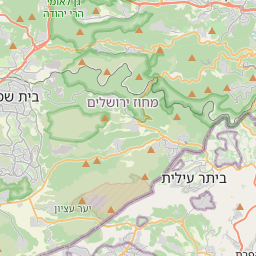
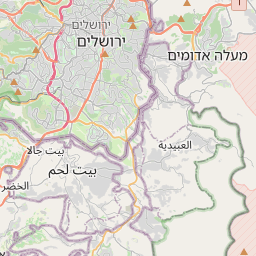
No mapa
Último preço
—
Preço mínimo
—
Mediana 7 d
—
Vendas 30 d
0
Faixa 30 d
—
Em circulação
0
Cotação
mediana
mín – máx
vendas
Sem vendas no período
Ver tabela
| Data | mediana | Mín | Máx | vendas |
|---|
Histórico de vendas
- Última venda
- —
- Média 30 d
- —
- Mínima 30 d
- —
- Máxima 30 d
- —
- Vendas 7 d
- 0
- Vendas 30 d
- 0
Ainda sem vendas.
Vendas anônimas: sem comprador nem vendedor. Os números contam só vendas entre jogadores.
Na Wikipédia
Texto em inglês Ainda não há artigo no seu idioma: trecho em inglês.
The Talpiot Tomb (or Talpiyot Tomb) is a rock-cut tomb discovered in 1980 in the East Talpiot neighborhood, five kilometers (three miles) south of the Old City in East Jerusalem. It contained ten ossuaries, six inscribed with epigraphs, including one interpreted as Yeshua bar Yehosef ("Jeshua, son of Joseph"), though the inscription is partially illegible, and its translation and interpretation is widely disputed. The tomb also yielded various human remains and several carvings. The Talpiot discovery was documented in 1994 in "Catalogue of Jewish Ossuaries in the Collections of the State of Israel" numbers 701–709, and first discussed in the media in the United Kingdom during March/April 1996. Later that year, an article describing the find was published in volume 29 of 'Atiqot, the journal of the Israel Antiquities Authority. A controversial documentary film, The Lost Tomb of Jesus, was produced in 2007 by producer/director James Cameron and filmmaker/journalist Simcha Jacobovici, and was released in conjunction with a book by Jacobovici and Charles R. Pellegrino titled The Jesus Family Tomb. The book and film make the case that the “Talpiot Tomb”, discovered outside Jerusalem in 1980, was the burial place of Jesus of Nazareth, members of his extended family, and several other figures from the New Testament. Many Christians interpreted that claim as implying that Jesus had not physically risen from the dead as the New Testament describes. . The identification has generated considerable scholarly debate and several books. Although many non-experts in statistics, including historians, archaeologists and theologians, weighed in on the statistical analysis, Prof. Andrey Feuerverger, a statistician at the University of Toronto, published two peer-reviewed articles in the prestigious Annals of Applied Statistics which argued in favor of the statistics, with dissenting opinions.
Texto: Wikipédia em inglês, CC BY-SA 4.0. · Imagem: Tamarah (CC BY-SA 3.0) ·
Cartas próximas

Talpiot
Neighborhood in Jerusalem
Nº Q1310344 ★

East Talpiot
Neighbourhood in southern East Jerusalem
Nº Q2920377 ★★★★

Túmulo de Absalão
Nº Q331729 ★★

Mitzpe Yosef
Israeli outpost in the occupied Palestinian West Bank
Nº Q6573327 ★★★

Maqam Nabi Yusha'
Tomb and shrine in Jordan
Nº Q12220583 ★★★

Tomb of Joshua
Biblical figure tomb in the West Bank
Nº Q6970838 ★