

Comum · Lugares
Tepeticpac
Political entity in pre-Columbian Mexico
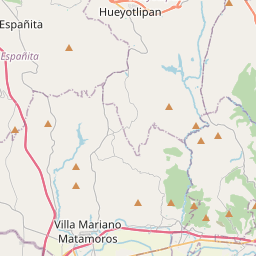
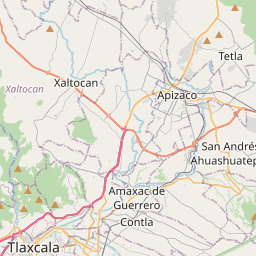
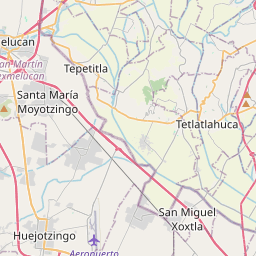
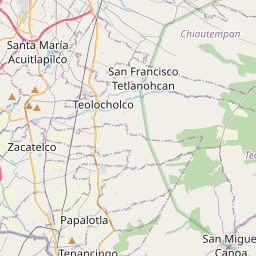
Tepeticpac is an archaeological site located in the village of Santiago Tepeticpac, in the municipality of Totolac, Tlaxcala, in Mexico. It sits atop the hills of Cuauhtzi, El Fuerte, and Tlaxistlan, at over 2,450 m (8,040 ft) above sea level, and covers approximately 98 hectares within the Puebla-Tlaxcala Valley.
No mapa
Na Wikipédia
Texto em inglês Ainda não há artigo no seu idioma: trecho em inglês.
Tepeticpac is an archaeological site located in the village of Santiago Tepeticpac, in the municipality of Totolac, Tlaxcala, in Mexico. It sits atop the hills of Cuauhtzi, El Fuerte, and Tlaxistlan, at over 2,450 m (8,040 ft) above sea level, and covers approximately 98 hectares within the Puebla-Tlaxcala Valley. It was part of the ancient huey altépetl (señorío) of Tlaxcallan, along with Ocotelolco, Tizatlan, and Quiahuiztlan. This polity was made up of several interconnected settlements in the central region of the Mexican Plateau. Two main phases of occupation have been identified through archaeological research: an Epiclassic phase from 600 to 900 AD, followed by a period of abandonment, and a Late Postclassic phase from approximately 1200 to 1519 AD. Between 20 and 25 types of polychrome wares have been documented through ceramic studies, with at least 169 terraces, six plazas, and ten temple structures identified through topographic surveys and distributed across five distinct sectors. As one of the four founding altepemeh of the Tlaxcallan Confederation, Tepeticpac served religious and defensive purposes. Some of the remains found include perimeter walls, watchtowers up to seven meters tall, and complex terracing systems adapted to the local topography. Ceramic iconography and altars suggest that Tezcatlipoca was the principal deity, alongside cults to Camaxtli, reflecting the sociopolitical organization of its ruling elite. Since 2009, the National Institute of Anthropology and History (Instituto Nacional de Antropología e Historia, INAH) has carried out excavations, mapping, and structural consolidation works. Between 2024 and 2025, over 17 million pesos were invested in widening the access road and installing signage. A site museum is planned to open in 2025, which will display various recovered archaeological materials, including the remains of a gomphothere.
Texto: Wikipédia em inglês, CC BY-SA 4.0. · Imagem: Wikimedia Commons (Public domain) ·


