

Comum · Lugares
Tulkarm
Governorate of the Palestinian National Authority
The Tulkarm Governorate (Arabic: محافظة طولكرم, romanized: Muḥāfaẓat Ṭūlkarm) is an administrative district and one of the 16 Governorates of Palestine, located in the north-western West Bank. The governorate's land area is 268 square kilometres.
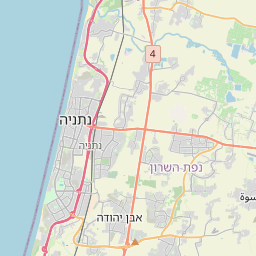
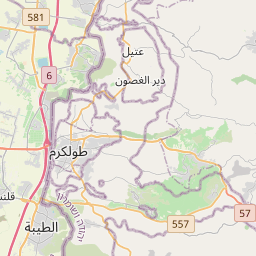
No mapa
Na Wikipédia
Texto em inglês Ainda não há artigo no seu idioma: trecho em inglês.
32°19′11.5″N 35°5′38.5″E / 32.319861°N 35.094028°E / 32.319861; 35.094028 The Tulkarm Governorate (Arabic: محافظة طولكرم, romanized: Muḥāfaẓat Ṭūlkarm) is an administrative district and one of the 16 Governorates of Palestine, located in the north-western West Bank. The governorate's land area is 268 square kilometres. According to the Palestinian Central Bureau of Statistics, the governorate had a population of 172,800 inhabitants. The muhafaza or district capital is the city of Tulkarm. During the Ottoman period, the region later forming the Tulkarm Governorate belonged to Jabal Nablus. Like other regions of Nablus' peripheral hinterland, it followed the provincial center, led by a closely knit web of economic, social and political relations between Nablus’ urban notables and the city’s surroundings. With the help of rural trading partners, these urban notables established trading monopolies that transformed Jabal Nablus’ autarkic economy into an export-driven market, shipping vast quantities of cash crops and finished goods to off-shore markets. Increasing demand for these commodities in the Ottoman Empire’s urban centers and in Europe spurred demographic growth and settlement expansion in the lowlands surrounding Jabal Nablus. In the 1860s, as part of the Ottoman Tanzimat, the area of Wadi al-Sha‘ir (Nahal Shechem) was incorporated into the Bani Ṣa‘b nahiya. Then, in the 1870s and 1880s, Bani Ṣa‘b was elevated into the level of a subdistrict with its qa’imaqam and municipal council administrated from Tulkarm.
Texto: Wikipédia em inglês, CC BY-SA 4.0. · Imagem: Mohammad Hijjawi (CC BY-SA 4.0) ·