

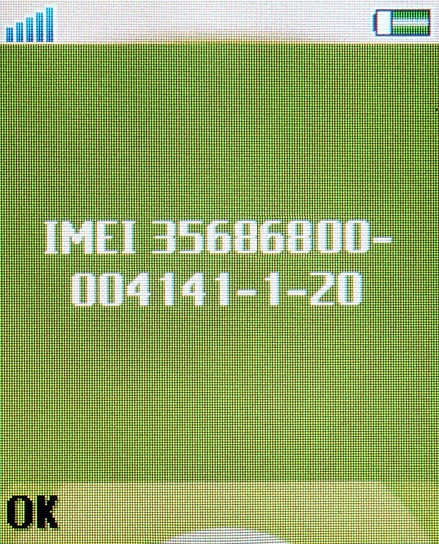
Type Allocation Code
Identifier
The Type Allocation Code (TAC) is the initial eight-digit portion of the 15-digit IMEI and 16-digit IMEISV codes used to uniquely identify wireless devices. The Type Allocation Code identifies a particular model (and often revision) of wireless telephone for use on a GSM, UMTS, LTE, 5G NR, iDEN, Iridium or other IMEI-employing wireless network.
Nº Q4405342 ★
Comum · Saberes
Type Allocation Code
Identifier
The Type Allocation Code (TAC) is the initial eight-digit portion of the 15-digit IMEI and 16-digit IMEISV codes used to uniquely identify wireless devices. The Type Allocation Code identifies a particular model (and often revision) of wireless telephone for use on a GSM, UMTS, LTE, 5G NR, iDEN, Iridium or other IMEI-employing wireless network.
Na Wikipédia
Texto em inglês Ainda não há artigo no seu idioma: trecho em inglês.
The Type Allocation Code (TAC) is the initial eight-digit portion of the 15-digit IMEI and 16-digit IMEISV codes used to uniquely identify wireless devices. The Type Allocation Code identifies a particular model (and often revision) of wireless telephone for use on a GSM, UMTS, LTE, 5G NR, iDEN, Iridium or other IMEI-employing wireless network. The first two digits of the TAC are the Reporting Body Identifier. This indicates the GSMA-approved group that allocated the TAC. Prior to January 1, 2003, the global standard for the IMEI started with a six-digit Type Approval Code followed by a two-digit Final Assembly Code (FAC). The Type Approval Code (also known as TAC) indicated that the particular device was approved by a national GSM approval body and the FAC identified the company that had built and assembled the device (which is not always the same as the brand name stamped on the device). Effective on that date, many GSM member nations and entities (mainly Europe) moved away from requiring that devices be approved by national bodies, and towards a system where device manufacturers self-regulate the device market. As a result, a manufacturer now simply requests an eight-digit Type Allocation Code for a new phone model from the international GSM standards body, instead of submitting a device for approval to a national review body. Both the old and new TAC uniquely identify a model of phone, although some models may have more than one code, depending on revision, manufacturing location, and other factors.
Texto: Wikipédia em inglês, CC BY-SA 4.0. · Imagem: Olaf Baumann (CC BY-SA 3.0) ·
Cartas próximas
-

Telefone básico inteligente
Nº Q965424 ★★★
Sem ofertas
-
C
Código ATC P01
Nº Q278523 ★★
Sem ofertas
-

Circuito integrado de aplicação especifica
Nº Q217302 ★★★
Sem ofertas
-
P
Phone Link
Syncing software to connect Windows PCs to mobile devices
Nº Q60775665 ★★
Sem ofertas
-
S
Simplified Technical English
Controlled language developed to help users of maintenance documentation
Nº Q1454599 ★★★★
Sem ofertas
-
G
Gigabit
Unidade de armazenamento de dados de computadores
Nº Q3105497 ★★
Sem ofertas
-
W
WiGig
Type of wireless local area network based on IEEE 802.11 standard and utilize milimeter wavelength
Nº Q59325959 ★
Sem ofertas
-

Joint Test Action Group
Nº Q545306 ★★
Sem ofertas
-
a
aerodrome reference code
Nº Q116961936 ★★
Sem ofertas
-
I
Identificador Único Global
Nº Q254972 ★★★
Sem ofertas
-
U
Universal Mobile Telecommunications System
Nº Q79686 ★★★
Sem ofertas
-
W
Wi-Fi 8
Wireless networking standard in development
Nº Q124049233 ★★★
Sem ofertas
-

Dispositivo OrCam
Nº Q20716433 ★★★
Sem ofertas
-
I
Interface de base texto
Nº Q184752 ★★
Sem ofertas
-
G
Global Industry Classification Standard
Industry taxonomy
Nº Q2628939 ★★★
Sem ofertas
-

Xiaomi Mi A1
Nº Q39060647 ★
Sem ofertas
-
C
Código ATC B
Section of Anatomical Therapeutic Chemical Classification System relating to drugs affecting the blood and blood forming organs
Nº Q433871 ★
Sem ofertas
-
C
Codificação por cento
Nº Q1046948 ★★★
Sem ofertas