
Kloster, Sweden
Settlement in Hedemora Municipality,Sweden
Kloster is a village in Hedemora Municipality, Dalarna, Sweden, kloster is a historically significant village in Hedemora Municipality, Dalarna County, Sweden, renowned for its transition from a medieval religious center to a major industrial hub. The village takes its name from the Gudsberga Abbey (Gudsberga kloster), which was established in 1486 as the final Cistercian monastery founded in Sweden before the Protestant Reformation.
Nº Q2504989 ★★★
Rare · Places
Kloster, Sweden
Settlement in Hedemora Municipality,Sweden
Kloster is a village in Hedemora Municipality, Dalarna, Sweden, kloster is a historically significant village in Hedemora Municipality, Dalarna County, Sweden, renowned for its transition from a medieval religious center to a major industrial hub. The village takes its name from the Gudsberga Abbey (Gudsberga kloster), which was established in 1486 as the final Cistercian monastery founded in Sweden before the Protestant Reformation.
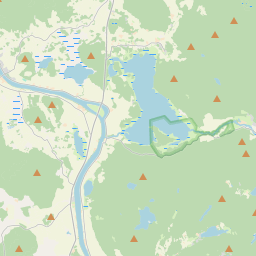
On the map

Last price
—
Floor price
—
7-day median
—
30-day sales
0
30-day range
—
In circulation
0
Price history
median
low – high
sales
No sales in this period
Show table
| Date | median | Low | High | sales |
|---|
Sales history
- Last sale
- —
- 30-day average
- —
- 30-day low
- —
- 30-day high
- —
- Sales 7d
- 0
- Sales 30d
- 0
No sales yet.
Anonymous sales: no buyer or seller shown. Figures count player-to-player sales only.
From Wikipedia
Kloster is a village in Hedemora Municipality, Dalarna, Sweden, kloster is a historically significant village in Hedemora Municipality, Dalarna County, Sweden, renowned for its transition from a medieval religious center to a major industrial hub. The village takes its name from the Gudsberga Abbey (Gudsberga kloster), which was established in 1486 as the final Cistercian monastery founded in Sweden before the Protestant Reformation. Following the dissolution of the monastery in 1527, the site evolved into a vital industrial site; by the 18th century, it housed Sweden's largest black powder mill (operating from 1741 to 1871) and a pioneering ironworks. At its peak in the 19th century, the ironworks employed approximately 900 people and featured the country's first sheet-metal rolling mill. Today, the village is a key stop on the Husbyringen nature trail and maintains several cultural landmarks, including the ruins of Gudsberga Abbey, the Kloster Ironworks Museum located in the former stables, and a forge used by the famed inventor Gustaf de Laval.
Text: Wikipédia, CC BY-SA 4.0. · Image: Calle Eklund/V-wolf (CC BY-SA 3.0) ·
Related cards

Vadstena
Urban area in Vadstena Municipality, Sweden
Nº Q265682 ★★★

Gustavia
Main settlement and capital city of St. Barthélemy
Nº Q34112 ★★★

Mount Desert Island
Island off the coast of Maine, United States
Nº Q1315822 ★★★

Connaught Place, New Delhi
Commercial hub of New Delhi, India
Nº Q2341950 ★★★

County Galway
County in Ireland
Nº Q169923 ★★★

Northern Cape
Province of South Africa
Nº Q132418 ★★★