


Pheneus
Polis of ancient Arcadia
Pheneus or Pheneos (Ancient Greek: Φένεος or Φενεός) was a town in the northeast of ancient Arcadia. Its territory, called Pheniatis (ἡ Φενεατική or ἡ Φενεᾶτις or η Φενική), was bounded on the north by that of the Achaean towns of Aegeira and Pellene, east by the Stymphalia, west by the Cleitoria, and south by the Caphyatis and Orchomenia.
Nº Q12885741 ★
Common · Places
Pheneus
Polis of ancient Arcadia
Pheneus or Pheneos (Ancient Greek: Φένεος or Φενεός) was a town in the northeast of ancient Arcadia. Its territory, called Pheniatis (ἡ Φενεατική or ἡ Φενεᾶτις or η Φενική), was bounded on the north by that of the Achaean towns of Aegeira and Pellene, east by the Stymphalia, west by the Cleitoria, and south by the Caphyatis and Orchomenia.
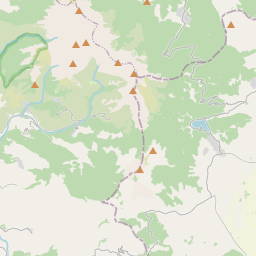
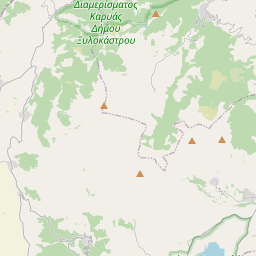
On the map
Last price
—
Floor price
—
7-day median
—
30-day sales
0
30-day range
—
In circulation
0
Price history
median
low – high
sales
No sales in this period
Show table
| Date | median | Low | High | sales |
|---|
Sales history
- Last sale
- —
- 30-day average
- —
- 30-day low
- —
- 30-day high
- —
- Sales 7d
- 0
- Sales 30d
- 0
No sales yet.
Anonymous sales: no buyer or seller shown. Figures count player-to-player sales only.
From Wikipedia
Pheneus or Pheneos (Ancient Greek: Φένεος or Φενεός) was a town in the northeast of ancient Arcadia. Its territory, called Pheniatis (ἡ Φενεατική or ἡ Φενεᾶτις or η Φενική), was bounded on the north by that of the Achaean towns of Aegeira and Pellene, east by the Stymphalia, west by the Cleitoria, and south by the Caphyatis and Orchomenia. This territory is shut in on every side by lofty mountains, offshoots of Mount Cyllene and the Aroanian chain; and it is about 7 miles (12 km) in length and the same in breadth. Two streams descend from the northern mountains, and unite their waters about the middle of the valley; the united river bore in ancient times the name of Olbius and Aroanius. There is no opening through the mountains on the south; but the waters of the united river are carried off by subterranean channels (katavóthra) in the limestone rocks, and, after flowing underground, reappear as the sources of the river Ladon. In order to convey the waters of this river in a single channel to the katavóthra, the inhabitants at an early period constructed a canal, 50 stadia in length, and 30 feet (9 m) in breadth. This great work, which was attributed to Heracles, had become useless in the time of Pausanias, and the river had resumed its ancient and irregular course; but traces of the canal of Heracles are still visible, and one bank of it was a conspicuous object in the valley when it was visited by William Martin Leake in 1806. The canal of Heracles, however, could not protect the valley from the danger to which it was exposed, in consequence of the katavóthra becoming obstructed, and the river finding no outlet for its waters. The Pheneatae related that their city was once destroyed...
Text: Wikipédia, CC BY-SA 4.0. · Image: Creator: UnknownUnknown / Photography: CNG Coins (CC BY-SA 3.0) ·
Related cards
-

Phlius
Ancient city in Corinthia, Greece
Nº Q1412043 ★
Not listed
-

Achaea (ancient region)
Ancient region in Peloponnese
Nº Q2790451 ★★★
Not listed
-

Orchomenus (Arcadia)
Ancient Greek city-state of Arcadia
Nº Q1855083 ★
Not listed
-
P
Phoenix (Caria)
Ancient city of Caria in modern-day Turkey
Nº Q65058814 ★★
Not listed
-

Mycenae
Ancient city, now an archaeological site in Argolis, Greece
Nº Q132564 ★★★★★
Not listed
-

Oropus
An ancient Greek city at the border of Attica and Boeotia
Nº Q18073696 ★
Not listed