
Tudor City
Apartment complex in New York City
Tudor City is an apartment complex on the East Side of Manhattan in New York City, bordering the Turtle Bay and Murray Hill neighborhoods. It lies on a low cliff east of Second Avenue, between 40th and 43rd Streets, and overlooks First Avenue to the east.
Nº Q549206 ★
Common · Places
Tudor City
Apartment complex in New York City
Tudor City is an apartment complex on the East Side of Manhattan in New York City, bordering the Turtle Bay and Murray Hill neighborhoods. It lies on a low cliff east of Second Avenue, between 40th and 43rd Streets, and overlooks First Avenue to the east.
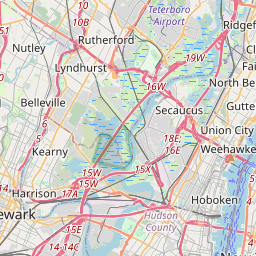
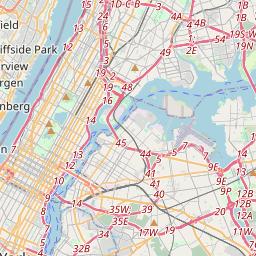
On the map
Last price
—
Floor price
—
7-day median
—
30-day sales
0
30-day range
—
In circulation
0
Price history
median
low – high
sales
No sales in this period
Show table
| Date | median | Low | High | sales |
|---|
Sales history
- Last sale
- —
- 30-day average
- —
- 30-day low
- —
- 30-day high
- —
- Sales 7d
- 0
- Sales 30d
- 0
No sales yet.
Anonymous sales: no buyer or seller shown. Figures count player-to-player sales only.
From Wikipedia
Tudor City is an apartment complex on the East Side of Manhattan in New York City, bordering the Turtle Bay and Murray Hill neighborhoods. It lies on a low cliff east of Second Avenue, between 40th and 43rd Streets, and overlooks First Avenue to the east. Designed and developed by the Fred F. French Company, the complex is named for its Tudor Revival architecture. Construction commenced in 1926, making it one of the first residential skyscraper complexes in the world. Tudor City was also one of the first and largest examples of a planned middle-class residential community in New York City. The complex is a New York City designated landmark district and is listed on the National Register of Historic Places. The 13-building complex consists of 11 housing cooperative structures, one rental apartment building, and one short-term hotel, which collectively house 5,000 people. Most of Tudor City's buildings are arranged around 41st and 43rd Streets, which slope upward east of Second Avenue; the eastern ends of the two streets are connected by Tudor City Place, which crosses over 42nd Street. Two parks flank 42nd Street, and there was originally an 18-hole miniature golf course in the southern park. The buildings generally contained stone, brick, and terracotta facades, as well as ornate Tudor-style details. The Fred F. French Company advertised Tudor City heavily, erecting large signs on the roofs of two buildings on 42nd Street. Before Tudor City was constructed, tenements and slums dominated the area. Following the development of the nearby Grand Central Terminal and office buildings during the early 20th century, Fred F. French began planning a residential enclave in Midtown Manhattan. French announced plans for Tudor City in December 1925, and the first 12 structures were completed in phases between October 1927 and late 1930. The section of...
Text: Wikipédia, CC BY-SA 4.0. · Image: Tudor_City_2003.jpg: dsearls derivative work: Niklem (CC BY-SA 2.0) ·
Related cards

Turtle Bay, Manhattan
Neighborhood in Manhattan, New York City, United States
Nº Q976477 ★★

30 Hudson Yards
Supertall skyscraper in New York City
Nº Q15264266 ★★★

One Times Square
Skyscraper in New York City
Nº Q1139633 ★★

Trump World Tower
Residential skyscraper in Manhattan, New York City, New York, USA
Nº Q844324 ★★

The Apthorp
Historic condominium apartment building on the Upper West Side of Manhattan, New York City
Nº Q7714100 ★

Turkish House
Skyscraper in Midtown Manhattan, New York City
Nº Q6063129 ★★★★