
Very Large Array
Radio astronomy observatory located on the Plains of San Agustin
The Karl G. Jansky Very Large Array (VLA) is a centimeter-wavelength radio astronomy observatory in the southwestern United States built in the 1970s. It lies in central New Mexico on the Plains of San Agustin, between the towns of Magdalena and Datil, approximately 50 miles (80 km) west of Socorro.
Nº Q461382 ★★
Uncommon · Places
Very Large Array
Radio astronomy observatory located on the Plains of San Agustin
The Karl G. Jansky Very Large Array (VLA) is a centimeter-wavelength radio astronomy observatory in the southwestern United States built in the 1970s. It lies in central New Mexico on the Plains of San Agustin, between the towns of Magdalena and Datil, approximately 50 miles (80 km) west of Socorro.
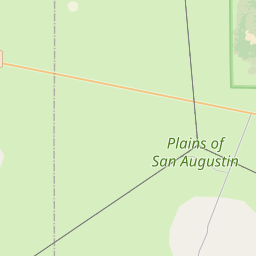
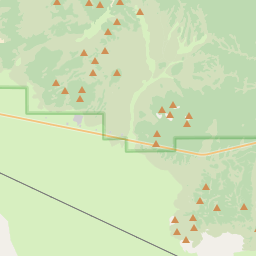
On the map
Last price
—
Floor price
—
7-day median
—
30-day sales
0
30-day range
—
In circulation
0
Price history
median
low – high
sales
No sales in this period
Show table
| Date | median | Low | High | sales |
|---|
Sales history
- Last sale
- —
- 30-day average
- —
- 30-day low
- —
- 30-day high
- —
- Sales 7d
- 0
- Sales 30d
- 0
No sales yet.
Anonymous sales: no buyer or seller shown. Figures count player-to-player sales only.
From Wikipedia
The Karl G. Jansky Very Large Array (VLA) is a centimeter-wavelength radio astronomy observatory in the southwestern United States built in the 1970s. It lies in central New Mexico on the Plains of San Agustin, between the towns of Magdalena and Datil, approximately 50 miles (80 km) west of Socorro. The VLA comprises 28 25-meter (82 ft) radio telescopes (27 of which are operational while one is always rotating through maintenance) deployed in a Y-shaped array and all the equipment, instrumentation, and computing power to function as an interferometer. Each of the massive telescopes is mounted on double parallel railroad tracks, so the radius and density of the array can be transformed to adjust the balance between its angular resolution and its surface brightness sensitivity. Astronomers using the VLA have made key observations of black holes and protoplanetary disks around young stars, discovered magnetic filaments and traced complex gas motions at the Milky Way's center, probed the Universe's cosmological parameters, and provided new knowledge about the physical mechanisms that produce radio emission. The VLA stands at an elevation of 6,970 feet (2,120 m) above sea level. It is a component of the National Radio Astronomy Observatory (NRAO). The NRAO is a facility of the National Science Foundation operated under cooperative agreement by Associated Universities, Inc.
Text: Wikipédia, CC BY-SA 4.0. · Image: user:Hajor (CC BY-SA 3.0) ·
Related cards

Very Large Telescope
Telescope facility in the Atacama Desert, Chile
Nº Q265628 ★★

Very-long-baseline interferometry
Type of astronomical interferometry used in radio astronomy
Nº Q1148351 ★

Large Millimeter Telescope
World's largest millimetric telescope, located in Mexico (2011)
Nº Q1805920 ★★★

Giant Magellan Telescope
Ground-based telescope under construction, planned for completion in 2029
Nº Q652252 ★★

Extremely Large Telescope
Major astronomical facility being constructed by the European Southern Observatory
Nº Q635105 ★★★

Low-Frequency Array
Large radio telescope network between Ireland and Poland, located mainly in the Netherlands
Nº Q1192324 ★