
Klein-Venedig
German colony in part of the territory of present-day Venezuela
Klein-Venedig (German for 'Little Venice') or Welserland (German pronunciation: [ˈvɛlzɐlant]) was the name of the Province of Venezuela between 1528 to 1546 when it was under the rule of the wealthy Welser banking and patrician family of the Free Imperial Cities of Augsburg and Nuremberg. It obtained colonial rights in return for debts owed by the Holy Roman Emperor Charles V, who was also King of Spain.
Nº Q464447 ★★★
Rare · Places
Klein-Venedig
German colony in part of the territory of present-day Venezuela
Klein-Venedig (German for 'Little Venice') or Welserland (German pronunciation: [ˈvɛlzɐlant]) was the name of the Province of Venezuela between 1528 to 1546 when it was under the rule of the wealthy Welser banking and patrician family of the Free Imperial Cities of Augsburg and Nuremberg. It obtained colonial rights in return for debts owed by the Holy Roman Emperor Charles V, who was also King of Spain.
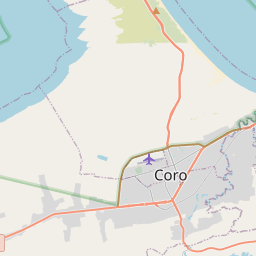
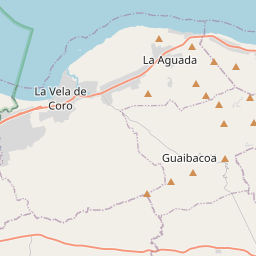
On the map
Last price
—
Floor price
—
7-day median
—
30-day sales
0
30-day range
—
In circulation
0
Price history
median
low – high
sales
No sales in this period
Show table
| Date | median | Low | High | sales |
|---|
Sales history
- Last sale
- —
- 30-day average
- —
- 30-day low
- —
- 30-day high
- —
- Sales 7d
- 0
- Sales 30d
- 0
No sales yet.
Anonymous sales: no buyer or seller shown. Figures count player-to-player sales only.
From Wikipedia
Klein-Venedig (German for 'Little Venice') or Welserland (German pronunciation: [ˈvɛlzɐlant]) was the name of the Province of Venezuela between 1528 to 1546 when it was under the rule of the wealthy Welser banking and patrician family of the Free Imperial Cities of Augsburg and Nuremberg. It obtained colonial rights in return for debts owed by the Holy Roman Emperor Charles V, who was also King of Spain. In 1528, Charles V issued a charter granting the House of Welser the rights to explore, rule and colonize the area, also with the motivation of searching for the legendary golden city of El Dorado. Representing the most significant territory of the German colonization of the Americas, the venture was led at first by Ambrosius Ehinger, who founded Maracaibo in 1529. After the deaths of Ehinger (1533) and then his successor Georg von Speyer (1540), Philipp von Hutten continued exploration in the interior, and in his absence from the capital of the province, the crown of Spain claimed the right to appoint the governor. On Hutten's return to the capital, Santa Ana de Coro, in 1546, the Spanish governor Juan de Carvajal had von Hutten and Bartholomeus VI. Welser executed. King Charles V revoked Welser's charter. Welser transported to the colony German miners, and 4,000 African slaves as labor to work sugar cane plantations. Many of the German colonists died of tropical diseases or were attacked and killed during frequent journeys deep into native territory in search of gold.
Text: Wikipédia, CC BY-SA 4.0. · Image: PhantomFunds (CC0) ·
Related cards

Fossa Eugeniana
Canal in the Netherlands and Germany
Nº Q638683 ★★

Henry V, Holy Roman Emperor
King of Germany and Holy Roman Emperor, the fourth and last ruler of the Salian dynasty
Nº Q151707 ★★★★

Geuzen
Guerrilla movement against Spanish rule in the Netherlands during the Eighty Years' War
Nº Q699636 ★★★

Langwedel
Municipality of Landkreis Verden, Germany
Nº Q514924 ★★★

Empire of Charles V
Collection of territories (Holy Roman Empire, Spanish Empire, Burgundian Low Countries, Austrian lands etc.) ruled in personal union by Charles V (1519–1556)
Nº Q107723325 ★★

Kingdom of Candia
Rule of Crete by the Republic of Venice (1212-1669)
Nº Q2288441 ★★